
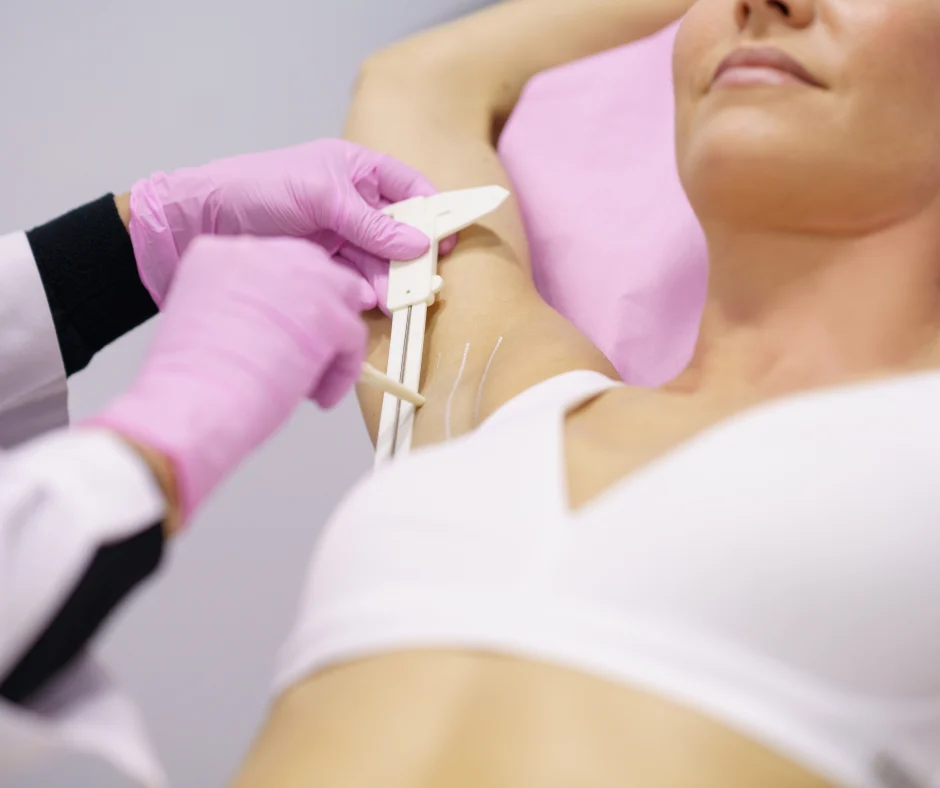

Most people who come to us about underarm sweating have been dealing with it for years before they finally book an appointment. They’ve tried clinical strength antiperspirants, kept spare shirts in the car and planned their wardrobe around dark colours. By the time they sit down with us, they’re tired of managing it.
If that sounds familiar, you’re far from alone. Axilla hyperhidrosis, the medical name for excessive underarm sweating, affects a lot more people than you’d guess, and it’s very treatable. Here’s what causes it, what your options look like and what to expect from treatment.
What Axilla Hyperhidrosis Really Means
Everyone sweats. It’s how the body cools itself. With hyperhidrosis, the sweat glands are overactive and produce far more sweat than the body needs, often when you aren’t hot or exercising at all. Axilla simply means armpit, so axilla hyperhidrosis (also called axillary hyperhidrosis) means the underarms are the main problem area.
Primary hyperhidrosis usually starts in the teen years or early adulthood, often runs in families and tends to affect both sides equally. It has nothing to do with poor hygiene or fitness. It’s thought to come from overactive signals between the nervous system and the sweat glands.
When Sweating Points to Something Else
Sometimes excessive sweating is secondary, which means something else is causing it. Thyroid problems, menopause, diabetes, infections and some medications can all be behind it. If your sweating started suddenly as an adult, covers your whole body, happens while you sleep or comes with weight loss or fever, see your family doctor before looking at cosmetic treatment.
How We Assess Your Sweating
At your consultation, we’ll ask how long you’ve had symptoms, what makes them worse, what you’ve already tried and how much sweating affects your day. Many providers use a simple four point scale that runs from sweating you never notice to sweating that’s intolerable and always gets in the way.
Sometimes a starch iodine test is used to map exactly where the sweat is coming from. Iodine is painted on the skin and dusted with starch, and the active sweat zones turn dark purple. It’s a bit messy but helps with precise treatment.
Starting With the Right Antiperspirant
For milder cases, a prescription strength antiperspirant with aluminum chloride is usually the first step. It works best applied at night to completely dry skin, since sweat glands are quieter while you sleep. It can be irritating though, and for many people it simply isn’t strong enough.
Botox as an Excessive Sweating Treatment
This is where we see the biggest change in quality of life. Botox is approved in Canada for severe underarm sweating, and it’s one of the most effective excessive sweating treatment options available. It works by blocking the nerve signals that switch on the sweat glands in the treated area, and it’s performed by a physician or nurse trained in the procedure.
The appointment takes about 20 to 30 minutes. A series of tiny injections is placed just under the skin across each underarm in a grid pattern. It stings a little, but most people handle it easily, and ice or numbing cream helps. Sweating starts to drop within a few days, with full results in about two weeks.
Results typically last around six months, and some people go longer. Most clients come back once or twice a year, often timing one treatment just before summer.
Simple Aftercare
- Shave a day or two before your appointment rather than the same day
- Skip deodorant and antiperspirant for the rest of the day after treatment
- Avoid hard workouts, saunas and hot tubs for 24 hours
- Don’t massage or rub the area
Mild tenderness or a small bruise can appear, and it fades quickly.
Other Options Worth Knowing About
For people who want a longer term fix, microwave based devices can permanently reduce the number of sweat glands in the underarm. Oral medications that lower sweating are also available through a doctor, though side effects like dry mouth and blurry vision can limit them. Surgery on the nerves that control sweating is a last resort and carries a real risk of heavier sweating elsewhere on the body.
Cost and Insurance
Botox for hyperhidrosis uses more product than a typical cosmetic treatment, so it costs more. The upside is that some private insurance plans in Ontario will cover part of the cost with a prescription and prior approval, so it’s worth calling your insurer before your appointment.
Getting Help in Oakville
If you’ve been reading up on axillary hyperhidrosis treatment in Oakville, a consultation is the best first step. At Uptown Med Spa in Oakville, we’ll assess your symptoms, talk through your options honestly and help you choose a plan that fits your life. For a lot of our clients, that first summer without sweat marks is a huge relief.
Frequently Asked Questions
Is Botox for underarm sweating safe?
Yes. It has been used for underarm sweating for many years and has a strong safety record when performed by a qualified medical professional.
Will I sweat more somewhere else?
Your underarms produce only a small share of your body’s total sweat, so most people don’t notice any change elsewhere after Botox.
Will I stop sweating completely?
Treatment greatly reduces underarm sweating but doesn’t need to stop it entirely, and a little sweat is perfectly healthy.