
LED light therapy is one of the most underrated treatments on any clinic menu. It doesn’t have the instant wow factor of a facial or the buzz of a new laser, but the science behind it is solid, and the clients who stick with it tend to become big fans.
We use LED on its own and as part of other treatments almost every day. Here’s what’s really happening when you lie under that glowing panel, and why a proper LED light therapy treatment can help with everything from breakouts to healing after a stronger procedure.
Light as Energy for Your Skin
LED stands for light emitting diode. Medical grade LED devices produce specific wavelengths of visible and near infrared light. They don’t contain UV rays, so they won’t tan or burn your skin.
The process behind it has a name, photobiomodulation. Put simply, certain wavelengths of light are absorbed by structures inside your skin cells, and that energy nudges the cells to behave in helpful ways. Different colours reach different depths and trigger different responses, which is why clinics use more than one.
Red Light and Renewal
Red light sits roughly in the 630 to 660 nanometre range. It’s absorbed by the mitochondria, the tiny energy centres inside your cells. Research suggests this boosts production of ATP, the fuel cells use to do their work. Fibroblasts, the cells that make collagen and elastin, seem to respond especially well.
Over a course of treatments, clients often notice softer fine lines, more even tone and a healthier look overall. Red light also calms inflammation, which is why we use it so often after peels and microneedling.
Near Infrared and Healing
Near infrared light, often around 830 nanometres, is invisible to the eye and reaches deeper than red. It’s linked with reduced inflammation, better circulation and faster tissue repair. That makes it useful for recovery after treatments, and some clients with sensitive or reactive skin find it helps settle things down.
Blue Light and Breakouts
Blue light, usually around 415 nanometres, works differently. The bacteria linked to acne produce natural compounds called porphyrins. When blue light hits those porphyrins, it sets off a reaction that damages the bacteria. Some research suggests it may also help with oiliness.
It works best on mild to moderate inflamed acne. It won’t fix deep cystic acne on its own, but paired with peels, a solid home routine and sometimes medical treatment, it can make a real difference.
What a Session Is Like
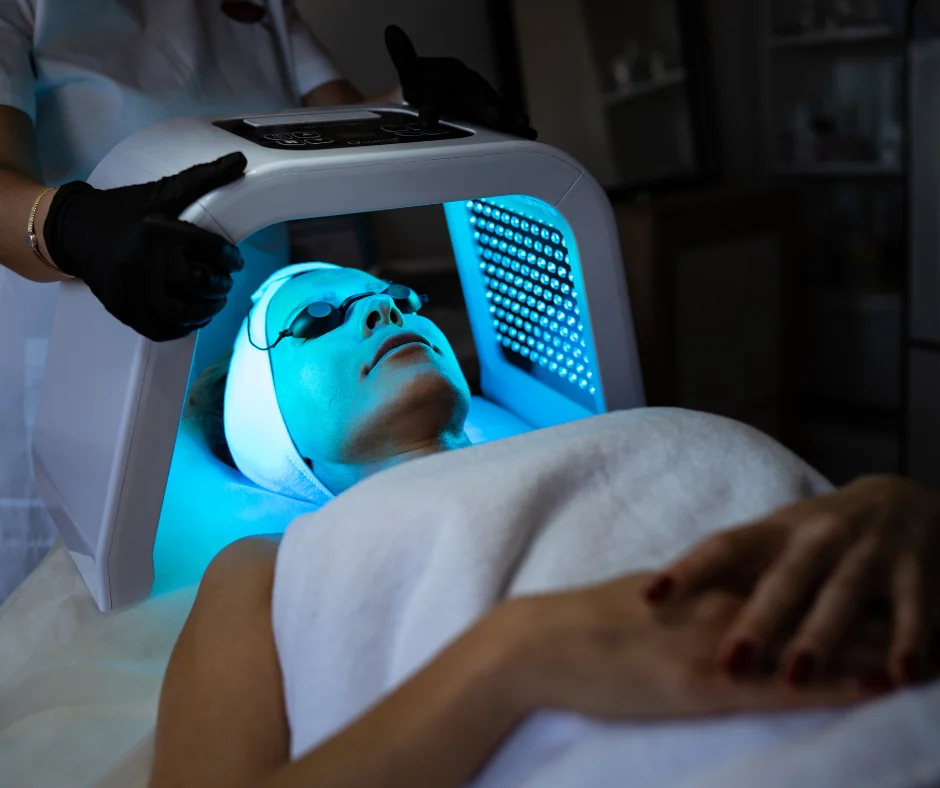
A clinic session is simple and honestly pretty relaxing. Your skin is cleansed, you’re given protective eyewear and the LED panel is positioned close to your face. Then you rest for about 15 to 20 minutes. You’ll feel gentle warmth at most. There’s no downtime, and you can wear makeup right after.
Most people need a series for the best results. A common plan is two sessions a week for four to six weeks, followed by maintenance every few weeks. LED also works well as the last step of a facial.
Clinic LED Compared With Home Masks
At home LED masks have become very popular, and some are decent. The difference comes down mostly to power and consistency. Professional devices deliver a much higher dose of energy per session, and the wavelengths are more carefully controlled. A home mask can still help between appointments if you use it regularly.
Who Should Be Careful
LED is safe for almost everyone and every skin tone, but there are exceptions. Let your provider know if you take medications that make you more sensitive to light, such as certain antibiotics or isotretinoin, if you have a history of skin cancer or if you have a condition triggered by light. If you’re pregnant, check with your doctor first.
Pairing LED With Other Treatments
LED really shines as a supporting player. After microneedling, it helps redness fade faster. After a peel, it calms irritation. After extractions, blue light helps keep new breakouts in check. Many of our clients book it with a hydradermabrasion facial for a visit that cleans, hydrates and calms all at once.
If you’ve been comparing clinics that offer LED light therapy around Oakville, ask what device they use, which wavelengths they offer and how they decide on your plan. At Uptown Med Spa in Oakville, we match the light to your skin goals and track your progress across the whole series.
Frequently Asked Questions
Does LED light therapy hurt?
No. Most people feel nothing more than mild warmth, and many find it relaxing enough to nap.
How soon will I see results?
Some people notice calmer skin after a few sessions, but collagen related changes usually take several weeks of consistent treatment.
Is LED safe for darker skin tones?
Yes. LED doesn’t rely on heat to target pigment, so it’s considered safe for all skin tones.